
Thoughts from My Gender and Sport Course
Following on from my last post about mountain biking, I wanted to share some reflections from a university course I’ve been doing—Gender and Sport at Malmö University.
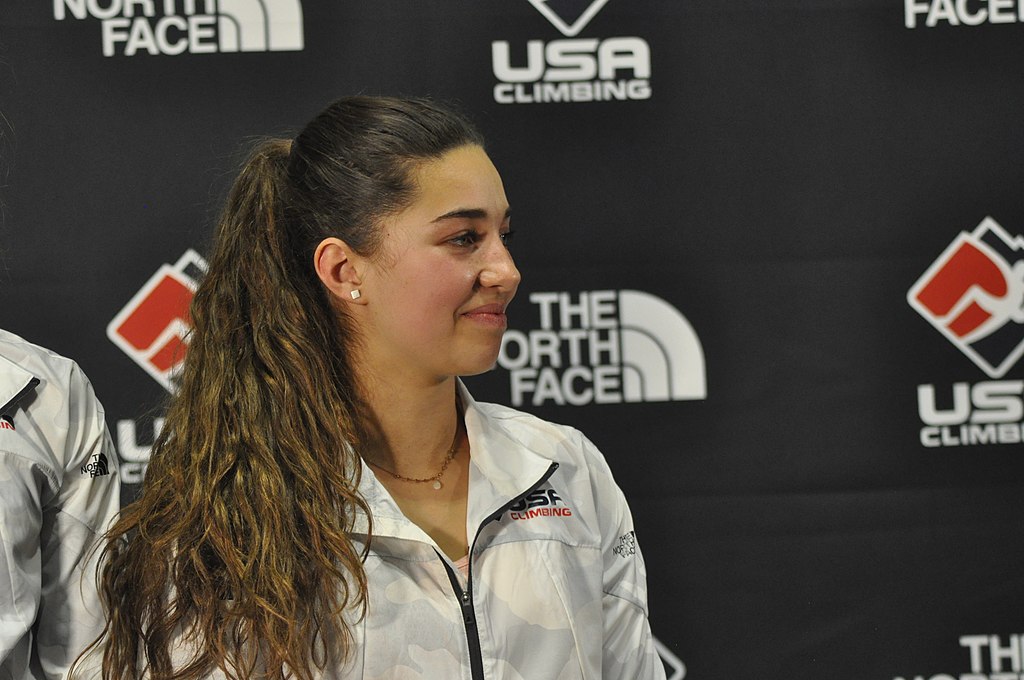
For our second assignment, I chose to analyse how elite climber Brooke Raboutou was portrayed in the media after she became the first woman to climb a 9b+ route—an incredibly difficult climb called Excalibur.
Why Brooke?
At first, I was tempted to write about Eileen Gu, the Chinese-American freestyle skier. She’s a fascinating figure: talented, stylish, highly media-savvy. But I quickly realised her story was far too complex to explore in just 1,000 words.
Brooke’s story seemed simpler. She did something amazing and got loads of positive media attention. But the more I read, the more I noticed how much of that praise still came with conditions.
Strength—but Make It Feminine
Take this line of praise: she’s “stylish” and has a “light frame.” These sound flattering on the surface, but they’re loaded. It reminded me of a concept I studied on the course called the “female apologetic”. As Lucas-Carr and Krane (2012) explain, female athletes are often expected to prove their femininity alongside their strength.
That definitely came through in the coverage of Brooke. Yes, she was celebrated—but the media also reassured us she wasn’t “too strong” or threatening. Instead, her success was framed as graceful, emotional, and even cute.
Surprise, She’s Strong!
Another issue was the way her achievement was portrayed as a surprise. Articles from sources like Planet Grimpe and Advnture.com kept pointing out that “no woman has ever done it before.” While factually true, this also implies that female success at this level is unexpected.
This fits with what Knott-Fayle et al. (2021) call cisgenderism in sports media, where male athleticism is the default, and women’s strength is seen as a novelty or exception.
Who Gets to Be “The Best”?
Brooke wasn’t just praised—she was labelled as a “top female climber.” Not simply a top climber. That subtle difference matters.
As Turtiainen and Friman (2021) found in their work on CrossFit, even when women outperform men, their achievements are often recontextualised to preserve male dominance. So, rather than saying Brooke is among the best in the world, full stop, the media often felt the need to qualify it.
What’s Left Out
What also struck me was what didn’t get talked about. None of the articles mentioned the lack of visibility for non-binary or trans athletes in climbing, or in sport more generally. As Knott-Fayle et al. (2021) also highlight, media silence around gender diversity tends to reinforce cisnormative standards.
Even within praise, Brooke is held up as the “ideal” female athlete—white, petite, feminine, and polite. All of which makes her media-friendly, but also limits how far her story can push against the system.
What Needs to Change?
Stories like Brooke’s show how much progress has been made—but also how far we still have to go.
To really change the narrative, we need to stop treating female strength as exceptional. We need media coverage that doesn’t rely on feminine stereotypes or comparisons to men, and that celebrates all athletes, not just those who neatly fit traditional boxes.
Next Up: Sasha DiGiulian
My next assignment is going to be on Sasha DiGiulian, another elite climber, whose autobiography I’ve just started listening to. It’s already packed with insights on childhood, strength, body image, and expectations. I’ll be looking at how she tells her own story, compared to how Brooke’s has been told for her.
Have you noticed these patterns in women’s sports coverage too?
I’d love to hear what you think. What needs to change for women athletes to be seen—and celebrated—on equal terms?
Further Reading
If you’re curious to explore these ideas more, here’s some of the academic reading I used for the essay:
Brigden, N., Forbis, M. M., & Hejtmanek, K. R. (2021). Epilogue: Judging the lift—Are strength sports insurgent or reactionary practices? In N. Brigden, M. M. Forbis, & K. R. Hejtmanek (Eds.), Gender and power in strength sports (pp. 215–218). Routledge.
Foxfield, A. (2025, April 10). “You forced me to confront my fears”: Brooke Raboutou sends the first female 9b+ sport climb in history. Advnture.com. https://www.advnture.com/news/raboutou-sends-first-female-excalibur
Jeanes, R., Spaaij, R., Farquharson, K., McGrath, G., Magee, J., Lusher, D., & Gorman, S. (2021). Gender relations, gender equity, and community sport spaces. Journal of Sport and Social Issues, 45(6), 545–567.
Knott-Fayle, G., Peel, E., & Witcomb, G. L. (2021). Representing diverse genders in sports media: The discursive production of cisgenderism in the UK press. In E. Peel & G. L. Witcomb (Eds.), Gender diversity and sport (pp. 134–152). Routledge.
Lucas-Carr, C., & Krane, V. (2012). Troubling sport or troubled by sport? Journal for the Study of Sports and Athletes in Education, 6(1), 21–44.
Paré, M. (2025, May 2). Historique : À 23 ans, Brooke Raboutou devient la première femme à enchaîner un 9b! Planet Grimpe. https://planetgrimpe.com/historique-a-23-ans-brooke-raboutou-devient-la-premiere-femme-a-enchainer-un-9b/
Shinde, N. (2025, May 6). The best climbers in the world right now. Red Bull. https://www.redbull.com/int-en/best-climbers-in-the-world
Stubbs, R. (2025, May 5). The gender gap has narrowed in climbing. These women have closed it. The Washington Post. https://www.washingtonpost.com/sports/olympics/2025/05/05/brooke-raboutou-janja-garnbret-excalibur/
Turtiainen, R., & Friman, U. (2021). Strength over gender? CrossFit, postfeminism and the representation of female strength. In N. Brigden, M. M. Forbis, & K. R. Hejtmanek (Eds.), Gender and power in strength sports (pp. 29–49). Routledge.
DiGiulian, S. (2024). Take the Lead: Hanging on, letting go, and conquering life’s challenges [Audiobook]. HarperCollins.