
Why sheepdogs are becoming the scariest thing in the Alps this summer
We’d barely made it over the pass when the dogs came. Five of them — white, huge, and fast — moved through the mist around a flock of sheep. I’d heard of patou dogs before – the Pyrenean mountain dogs bred to protect sheep from wolves – but this was the first time I’d been properly confronted by one. Such encounters can sometimes escalate into an attack if the dogs perceive a threat.
How We Tried to Avoid Conflict
We did everything by the book. As a group of hikers, we stopped still, stayed calm, and tried not to wave our arms or make eye contact. Four of the dogs came close to sniff us as part of their assessment, seemed satisfied we weren’t a threat, and wandered off.
The Sheepdog Wouldn’t Back Down
But one didn’t. It snarled, barked persistently—a clear sign of its protective instincts—and circled us for the best part of 45 minutes. The dog seemed ready to chase us if we made any sudden moves. Our hiking guide Vincent – usually unflappable – even pulled out his Stanley knife, just in case.
Eventually, we had no choice but to retreat. The route we were supposed to take was cut off. We retraced our steps to our overnight refuge, nerves jangling, half-expecting to meet another flock on the way. Mountain hikes in the French Alps often require extra caution due to the presence of these protective dogs.
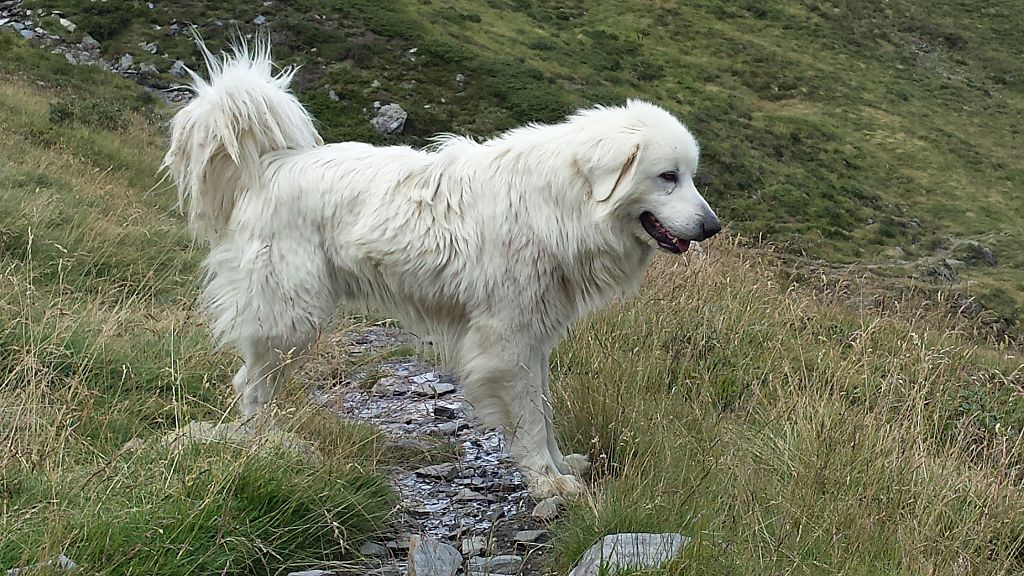
Understanding the Patou: The Guardian of the Alps
The Patou, or Pyrenean Mountain Dog, is much more than just a familiar sight in the French Alps and Pyrenees—it’s a living symbol of the region’s age-old battle to protect sheep herds from predators. Bred for centuries as a guard dog, the Patou is renowned for its unwavering loyalty, intelligence, and courage. These mountain dogs are specifically trained as herd protection dogs, tasked with defending flocks against wolves, bears, and any other potential threat that might endanger livestock.
With their thick, white coats and imposing size, Patou dogs blend in with the sheep they protect, making them both a visual and physical deterrent to predators. Their main role is to stay close to the flock, constantly alert to any sign of danger. When a wolf or bear approaches, the Patou will bark, position itself between the threat and the sheep, and, if necessary, confront the predator head-on. This breed’s protective instincts are so strong that they will not hesitate to put themselves in harm’s way to keep their herd safe.
For hikers and mountain bikers exploring the French Alps, the presence of Patou dogs is a reminder of the region’s wildness and the ongoing need to protect flocks from natural predators. While these dogs are not aggressive by nature, their training and deep bond with their herd mean they can perceive any unfamiliar person or animal as a potential threat. Understanding the Patou’s role and behaviour is essential for anyone venturing into the mountains, as respectful encounters are key to coexisting safely with these remarkable guardians.
Hiking in the French Alps: A Landscape of Beauty and Risk
There’s no denying the allure of the French Alps—its peaks, rolling meadows, and the charm of alpine villages make it a paradise for hikers and mountain bikers alike. But alongside this beauty comes a unique set of risks, especially when it comes to encounters with guard dogs like the Patou. These dogs are an integral part of the landscape, working tirelessly to protect sheep herds and flocks from predators such as wolves.
For anyone setting out on a mountain hike or bike ride, the golden rule is simple: stay calm and keep your distance from any flocks or herds you encounter. Guard dogs are trained to protect sheep, not to interact with people, and approaching them—or their charges—can be seen as a threat. It’s important to resist the urge to pet or feed these dogs, no matter how friendly they may appear from afar.
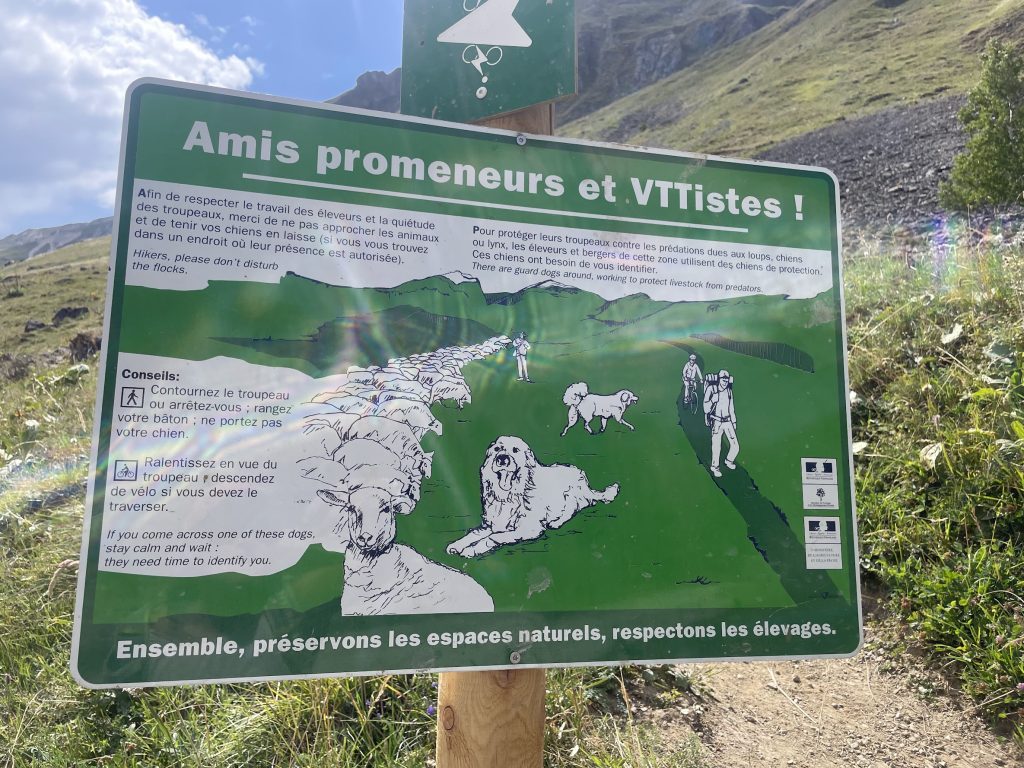
Always pay attention to signs posted along trails, which often indicate the presence of livestock and guard dogs. The French government has put measures in place to protect both hikers and the growing wolf population, including clear guidelines and marked grazing zones. Respecting these signs and following local advice can help prevent unwanted encounters and reduce the risk of attacks.
If you do come across a Patou or other guard dogs, remember to stay calm, avoid sudden movements, and give the animals plenty of space. By understanding the role these dogs play in protecting herds and following the recommended precautions, you can enjoy the breathtaking scenery of the Alps while minimising the risks. The balance between tourism, livestock protection, and wildlife conservation is delicate, and every hiker’s awareness and respect help maintain it for everyone’s safety.
Patou Attacks Are on the Rise in France
Back at the refuge, the guardian admitted she was frightened too. She told us she’d been bitten in both legs while out mountain biking.
Speaking to one tourist board representative, we were told that one of her new staff had already been bitten while cycling this summer. She also described another incident where a hiker was attacked by a Patou while walking near a car park, highlighting how close these encounters can happen to where people leave their vehicles. “It is a problem in France,” she said, “and the mayors are trying to find a solution. But they haven’t yet.”
Vincent said he’d never seen a herd protection dog behave like that before. He’d even tried to call the farmer whose sheep herd it was, but the man shrugged: “Other people passed, no problem.” In some cases, two dogs have been involved in attacks on walkers, making these situations even more dangerous.
It was suggested there may have been a language barrier — many shepherds are seasonal workers – but this seems to me to be a familiar case of defensiveness…pushing the blame elsewhere.
Whatever the reason, the experience was terrifying. A huge guard dog, teeth bared and saliva dripping, keeping a calm group of hikers pinned down on a marked trail.
It was enough to cut our mountain hike short.
Since then, everyone I’ve spoken to seems to have a story: hikers forced off trails, cyclists chased, dogs going after smaller pets. In July, two hikers near Grenoble were airlifted after being badly bitten on the legs. A woman in the Vercors was rescued after climbing a tree to escape, where she had to wait for emergency services to arrive. A small dog was nearly killed by working dogs in the Hautes-Alpes. One story involved a puppy being injured during an attack, showing that even a puppy can be at risk. Even puppies raised with flocks can develop strong protective instincts, which is why they are so loyal and defensive. There are also accounts of walkers being chased while walking on marked trails, and a hiker whose rucksack was repeatedly bit by a guard dog, escalating into a physical attack.
Apologies for the language here:
Why Are Patous Becoming More Aggressive?
One factor is the French government’s ongoing rewilding efforts — wolf numbers are up, and farmers are leaning harder on livestock guardian dogs to protect their flocks. Patou dogs are often born and raised among livestock, which shapes their guarding instincts from an early age. The Patou is a breed specifically developed for guarding and protecting herds, including sheep and goats, from wolf attacks. It’s not uncommon for a single flock to be watched by multiple patous, whose responsibility is to protect herds and form a family-like bond with their flock and shepherd. Wolves are a protected species in the Alps, which complicates livestock protection for farmers.
Similar livestock guardian breeds are found in Italy and the Rhône Valley, and Haute Savoie is another region where these issues are prominent.
But this now overlaps with tourism. In Les Belleville, like so many parts of the Alps, mountain tourism is heavily promoted in summer. And yet, even on official, marked trails — even with a guide — you can still find yourself blocked by a guard dog that won’t back down.
What To Do If You Encounter a Patou
There’s a clear golden rule: don’t panic. These practical tips are designed to help hikers walk safely in areas with guard dogs in the French Alps. Here’s what else to do:
- Stay calm and still — no sudden movements
- Avoid direct eye contact
- Speak gently and move slowly away if safe
- Do not approach the dog or try to cross through the flock
- If you’re hiking with your own pet, keep it on a leash and close
- Do not shout — loud noises can escalate the situation
- Use trail apps like PastoRando to check for grazing zones
But here’s the catch — when a single dog is unstable or poorly trained, none of that helps.
Do the French Alps Need Better Guard Dog Warnings?
This isn’t about vilifying farmers or their dogs. Patous are doing what they’ve been bred for — to protect flocks in wolf country. But if we want hiking in the French Alps to remain a safe and accessible activity, there needs to be more balance.
Better signage. Real-time alerts. And yes, accountability — especially in areas promoted to international visitors.
Final Thoughts: A Growing Problem for Hikers
For now, though, the truth is this: patou dogs are as much of a hazard as loose scree or sudden storms. They may not bite every time — but when they do, the consequences can be serious. And when they don’t, the fear alone is enough to turn a beautiful trail into a forced retreat.
I love these mountains, and I respect the traditions that keep sheep herds safe. But until France finds a solution to the patou problem, I’ll be treating every distant flock as a warning sign — and weighing up whether the next pass is really worth crossing.