
Ancient Egypt arrives at Battersea Power Station
I was recently lucky enough to attend the press preview of Ramses and the Pharaohs’ Gold at NEON’s Battersea Power Station venue. I’m less familiar with this period of Egypt’s history than with Egypt under Rome, for example, so I was quite excited to learn more.
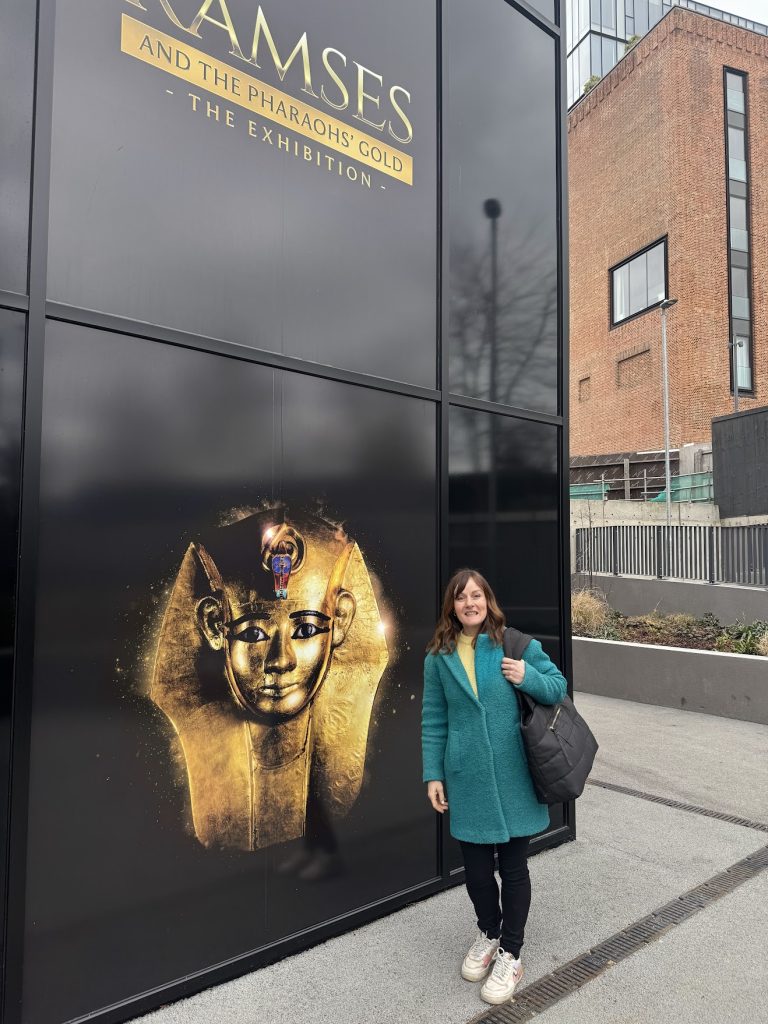
As I wandered round looking at the 3,000-year-old artefacts, I also ended up ‘modelling’ for a few photographers there who needed some shots of visitors. Ramses, who put his face on almost every available surface in Egypt, would probably have approved.
The exhibition opened to the public on 28 February 2026. It features 180 objects on loan from Egypt’s Supreme Council of Antiquities and the Egyptian Museum, from museums and archaeological sites across Egypt. London is the sixth stop on a global tour that has already travelled 50,000km.
Senior Vice President at NEON World Heritage Exhibitions, Andres Numhauser, called the logistics “mind-blowing”.
“It has travelled, Ramses, 50,000 kilometres all over the world with two 747 aeroplanes. Security, logistics, police, the army, you can name it,” he said.
The headline loan is the cedar wood coffin that once held the mummy of Ramses II. The coffin last left Egypt in 1976 when it was taken to Paris for restoration after the mummy was found to be infested with fungi. It was rediscovered in 1881 in the Royal Cache at Deir el-Bahari, having originally been placed in Ramses’ tomb in the Valley of the Kings.
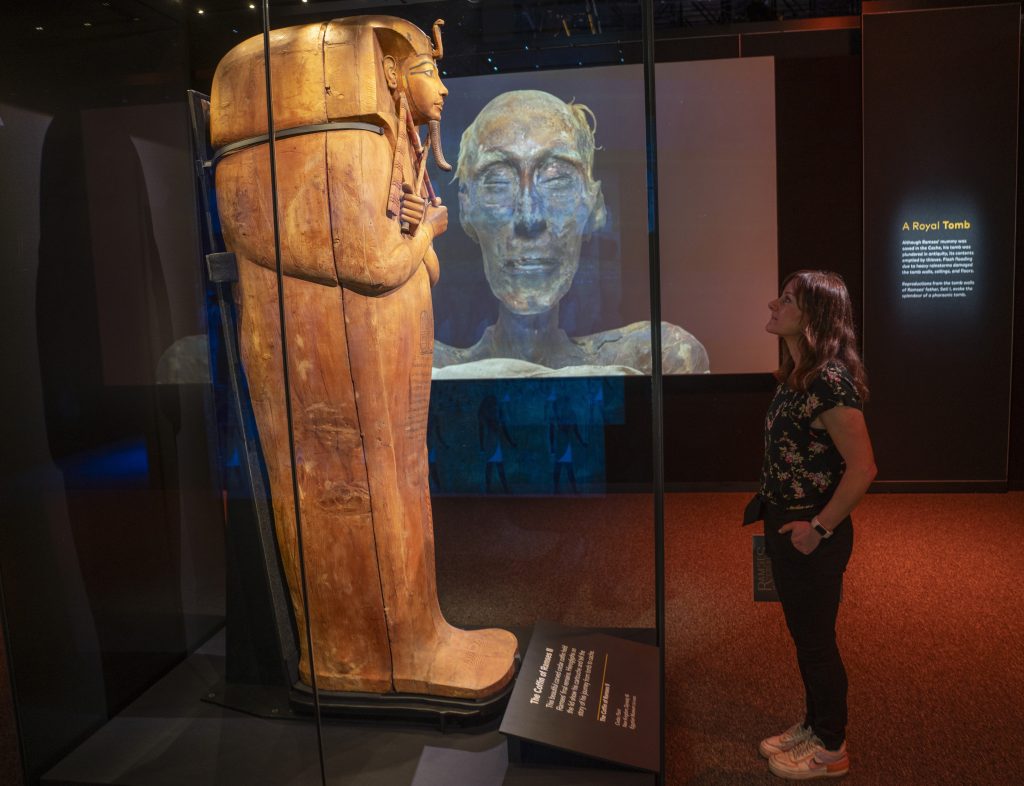
Next to it at the preview, Dr Hisham El-Leithy, Secretary-General of Egypt’s Supreme Council of Antiquities, said:
“It is something unbelievable to have it here. Really, can you see the talent of the artist, how he polished this cedar wood coffin to look, to have it in this shape.”
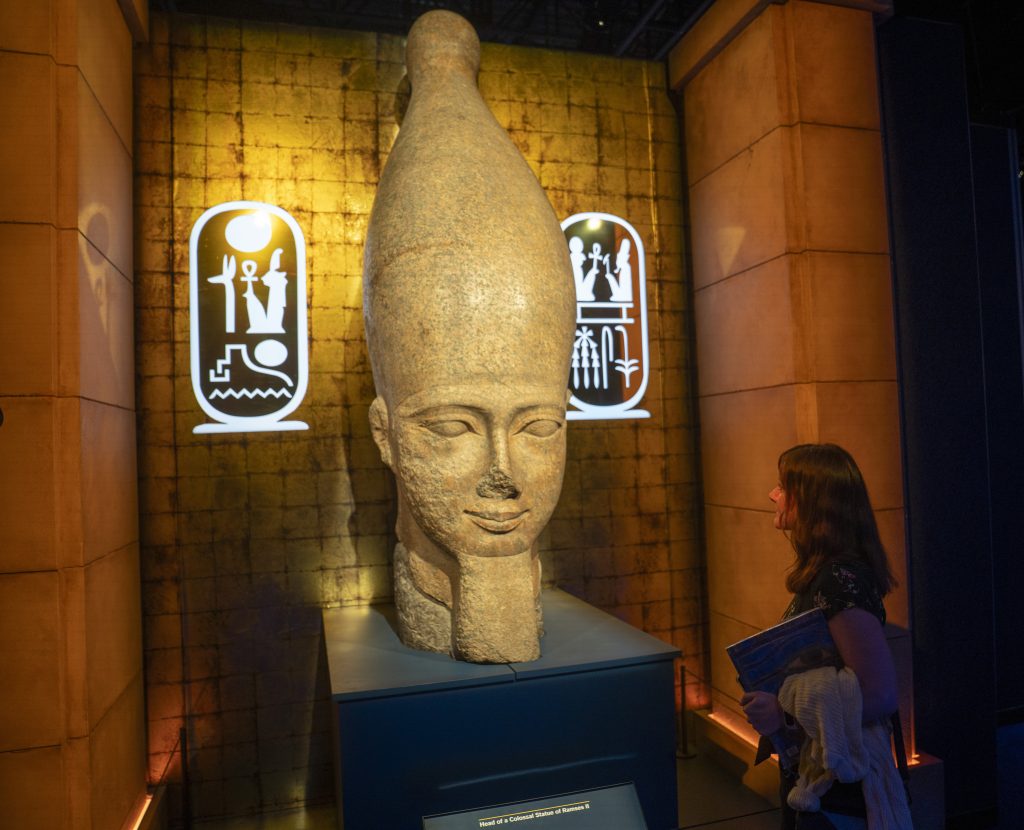
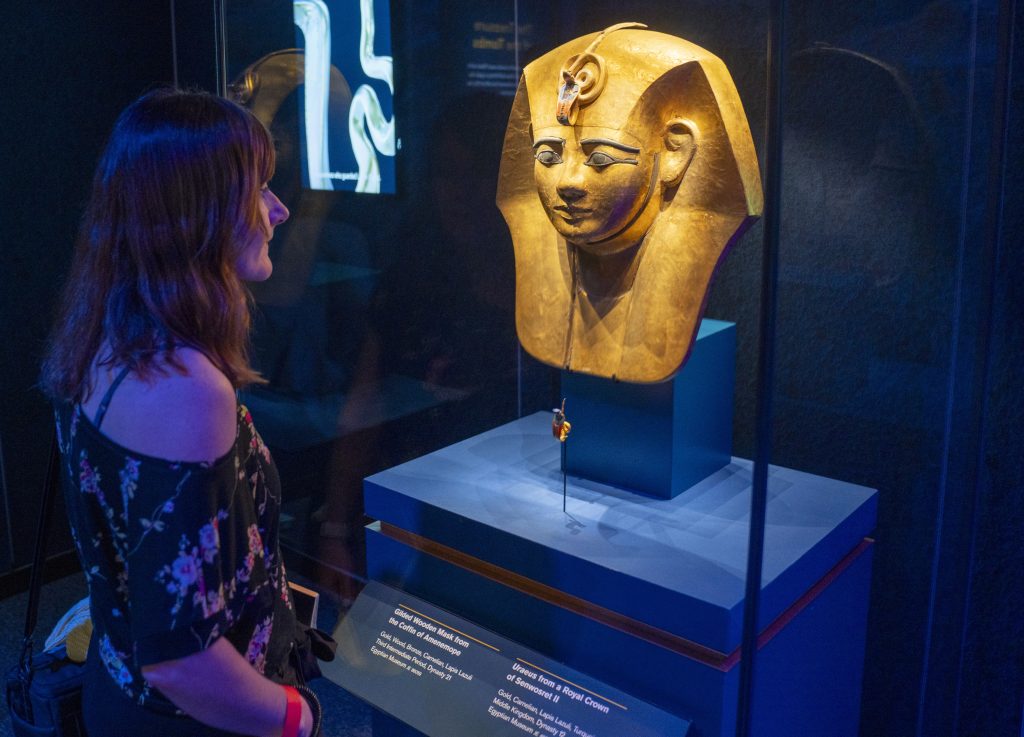
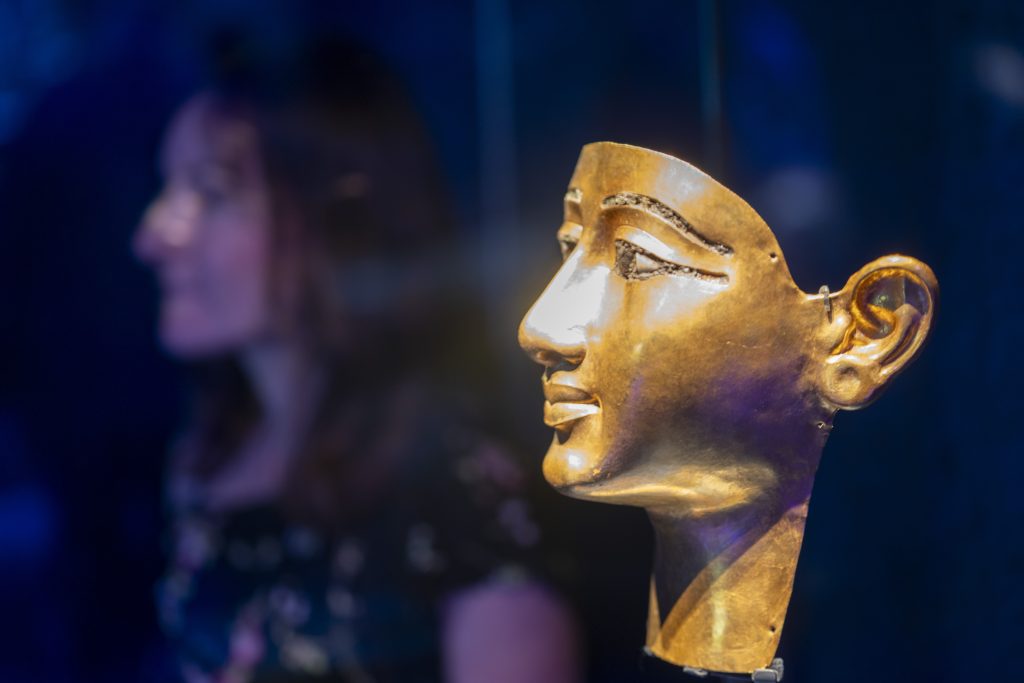
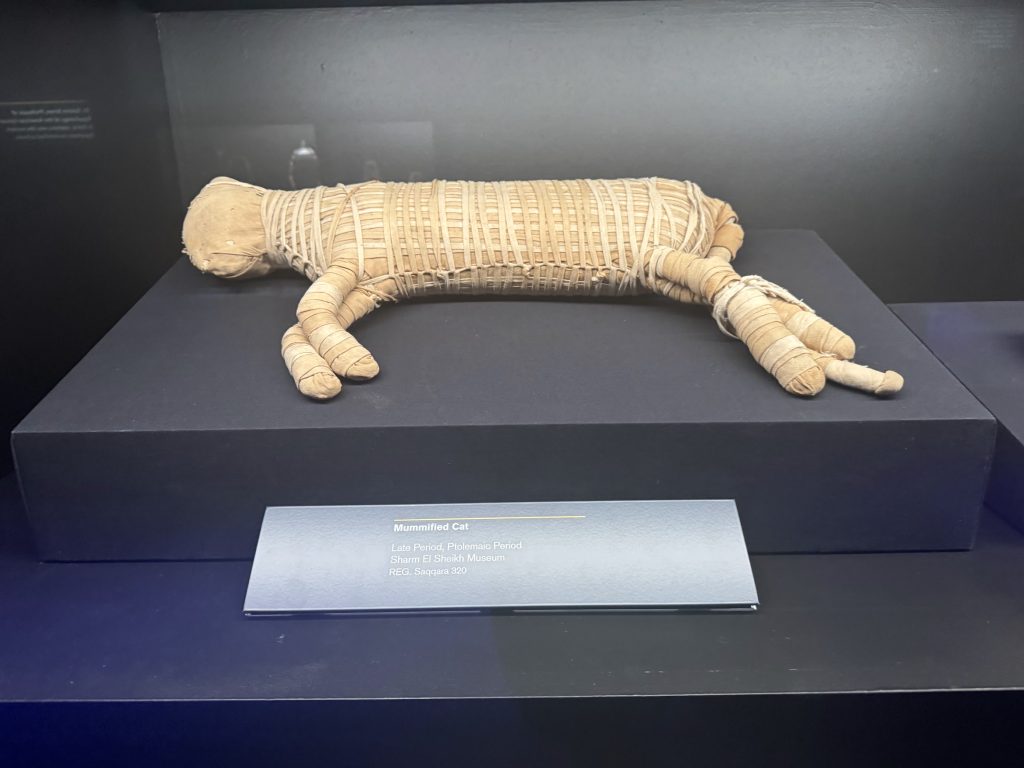
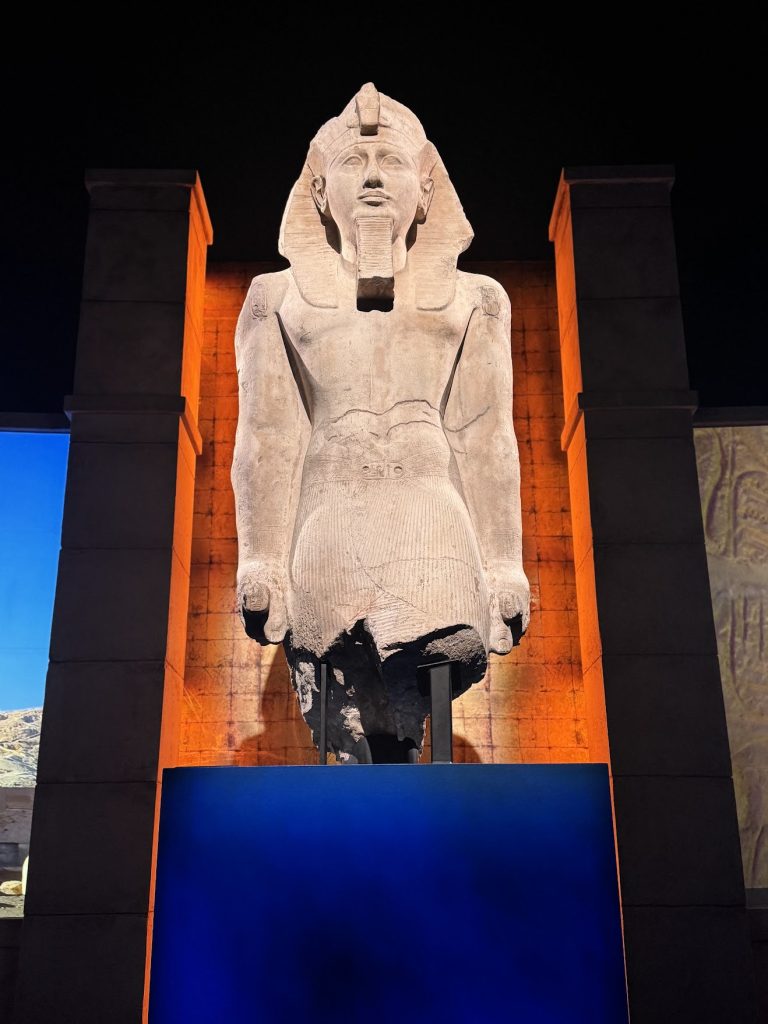
The exhibition combines monumental stone with smaller, highly worked objects. A massive granodiorite head of Ramses II dominates the early galleries. A pink granite obelisk from Pi-Ramesses is nearby. There are gilded funerary masks, jewellery across multiple dynasties, and animal mummies, many of which have never been seen outside Egypt.
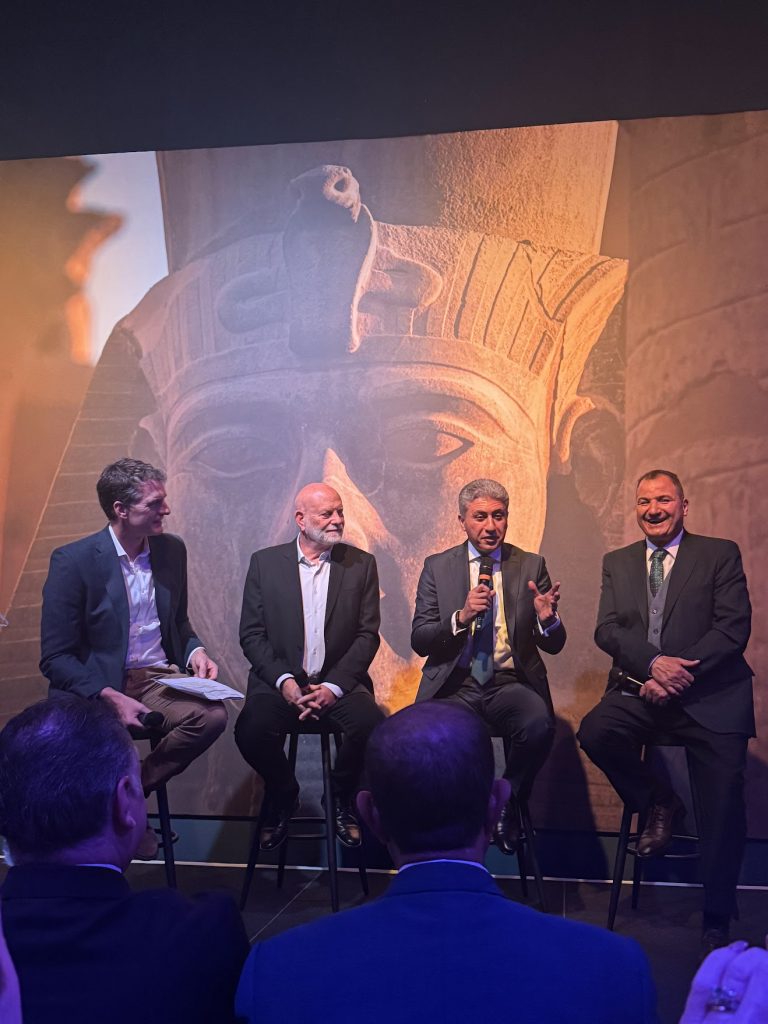
Egypt’s Minister of Tourism and Antiquities, Sherif Fathy, called the exhibition “cultural diplomacy”
“We do believe in sharing what we have with humanity and with other nations, and also we use it as a teaser, if I may call it like this, or an appetiser for people to try to imagine what they will see in Egypt when they visit the country.”
A portion of the proceeds goes towards conservation in Egypt, including the restoration of Ramses II’s tomb in the Valley of the Kings.
The exhibition also includes a virtual reality experience, which I didn’t think was my sort of thing, but I really enjoyed it! . I sat in a pod with a headset and swooped through the temples of Abu Simbel and the tomb of Queen Nefertari, carved during Ramses’ reign, guided by Nefertari herself.
Historian and broadcaster Dan Snow was at the press preview as the exhibition’s Lead Storyteller, joining Egyptian officials and NEON representatives on the panel. I’m a bit History Hit fan so was exciting to see him in action.
Ramses II reigned for nearly 67 years, fought battles from what is now Sudan to Syria, built vast projects and signed what is considered the first recorded peace treaty after the Battle of Kadesh. The exhibition reflects that scale in the objects and in the presentation.
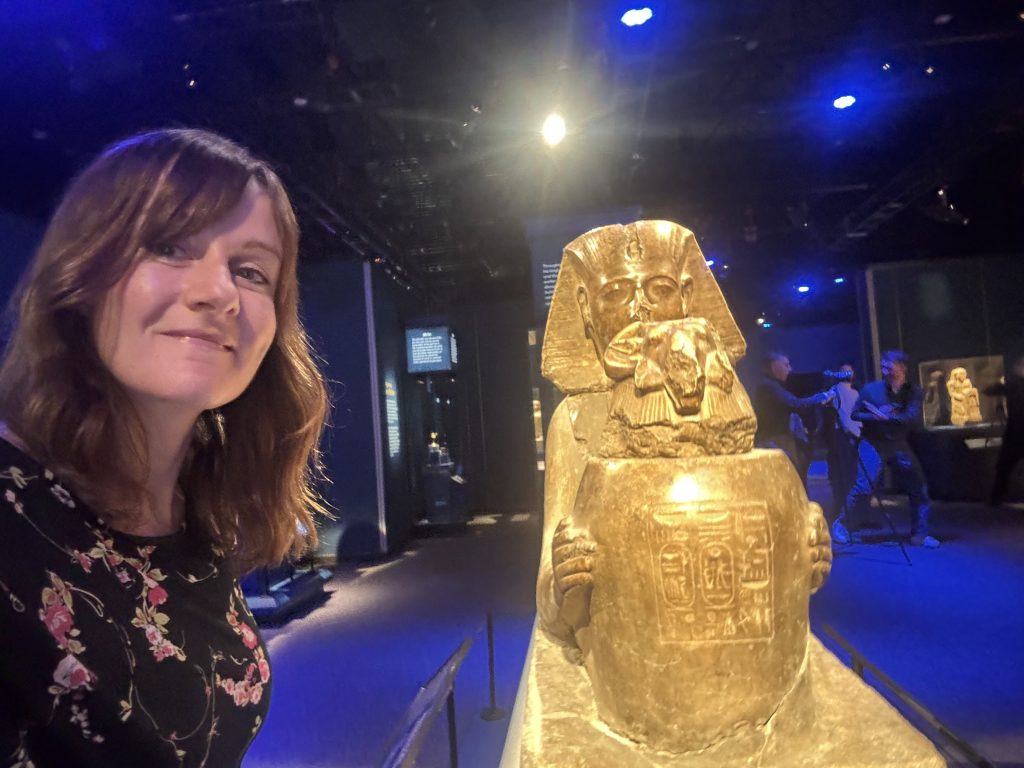
Ramses and the Pharaohs’ Gold at NEON, Battersea Power Station from 28 February 2026.